
15 Jun, 2026
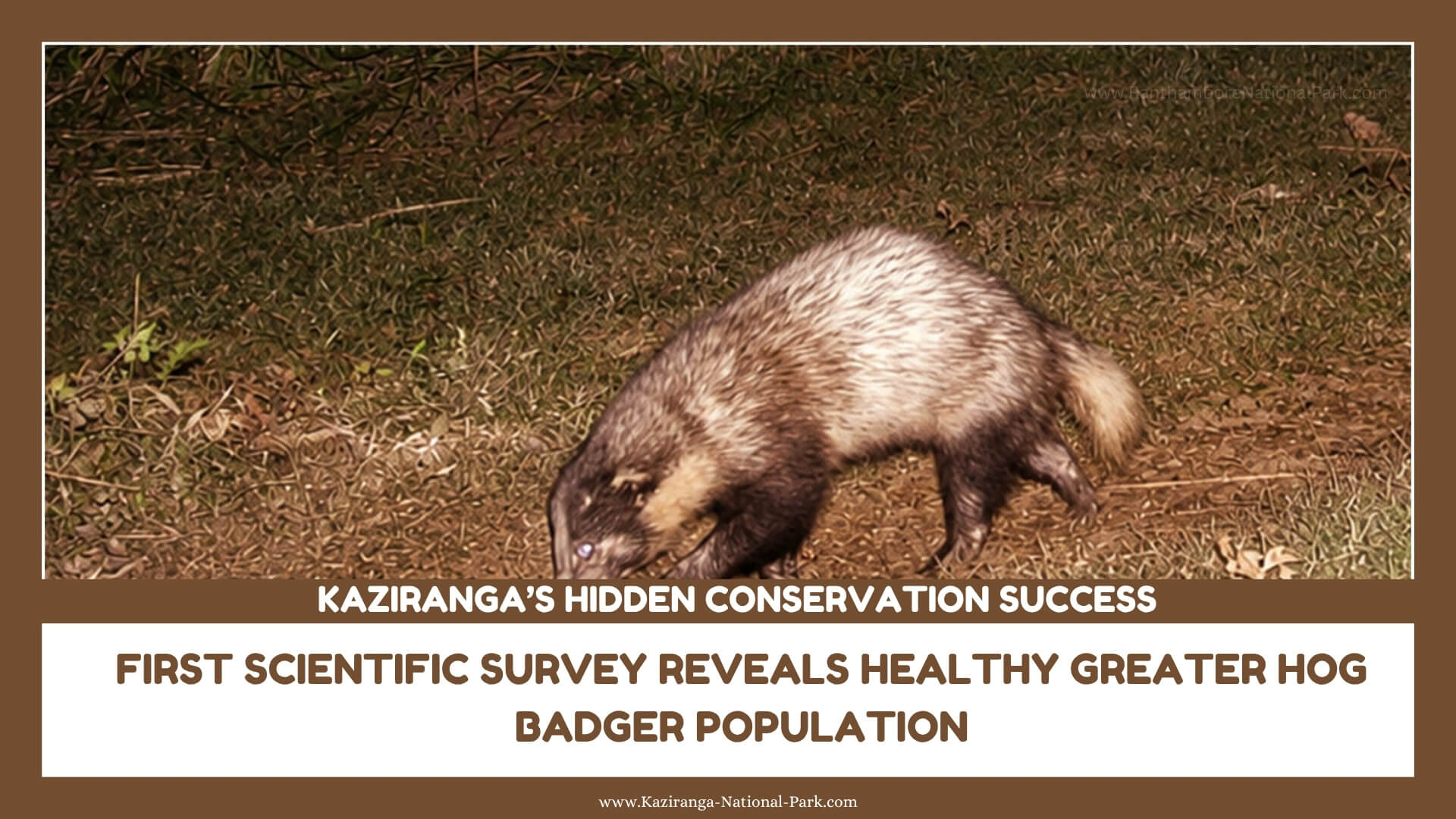
Kaziranga’s Hidden Conservation Success: First Scientific Survey Reveals Healthy Greater Hog Badger Population
Globally renowned for its one-horned rhinos and thriving tiger population, a new scientific assessment has brought attention to one of Kaziranga’s lesser-known residents. The first-ever survey of the Greater Hog Badger, a globally Vulnerable species in India, has revealed a healthy and widespread population within Kaziranga National Park. Conducted using camera-trap data collected during tiger monitoring exercises, the study highlights the park’s remarkable biodiversity and reinforces Assam’s growing importance in wildlife conservation beyond flagship species.
First Scientific Assessment Brings Good News
Kaziranga National Park and Tiger Reserve recently released its first scientific assessment of the Greater Hog Badger (Arctonyx collaris), locally known as “Mati Gahori” in Assam.
The study was carried out by Kaziranga Tiger Cell and Wildlife Conservation Trust (WCT) as well as The Fishing Cat Project.
Researchers analysed camera-trap images collected during previous All India Tiger Estimation exercises to estimate population density and habitat occupancy.
The Recent Findings from the Park
The assessment produced encouraging results:
- At least 55 individual Greater Hog Badgers estimated across approximately 1,100 sq km
- Population found to be widely distributed across the reserve
- Evidence suggests a healthy and potentially viable population
- Presence recorded across diverse habitat types within Kaziranga
- Officials have also indicated that more than 60 individuals were documented through camera-trap bycatch records.
Why This Finding Matters?
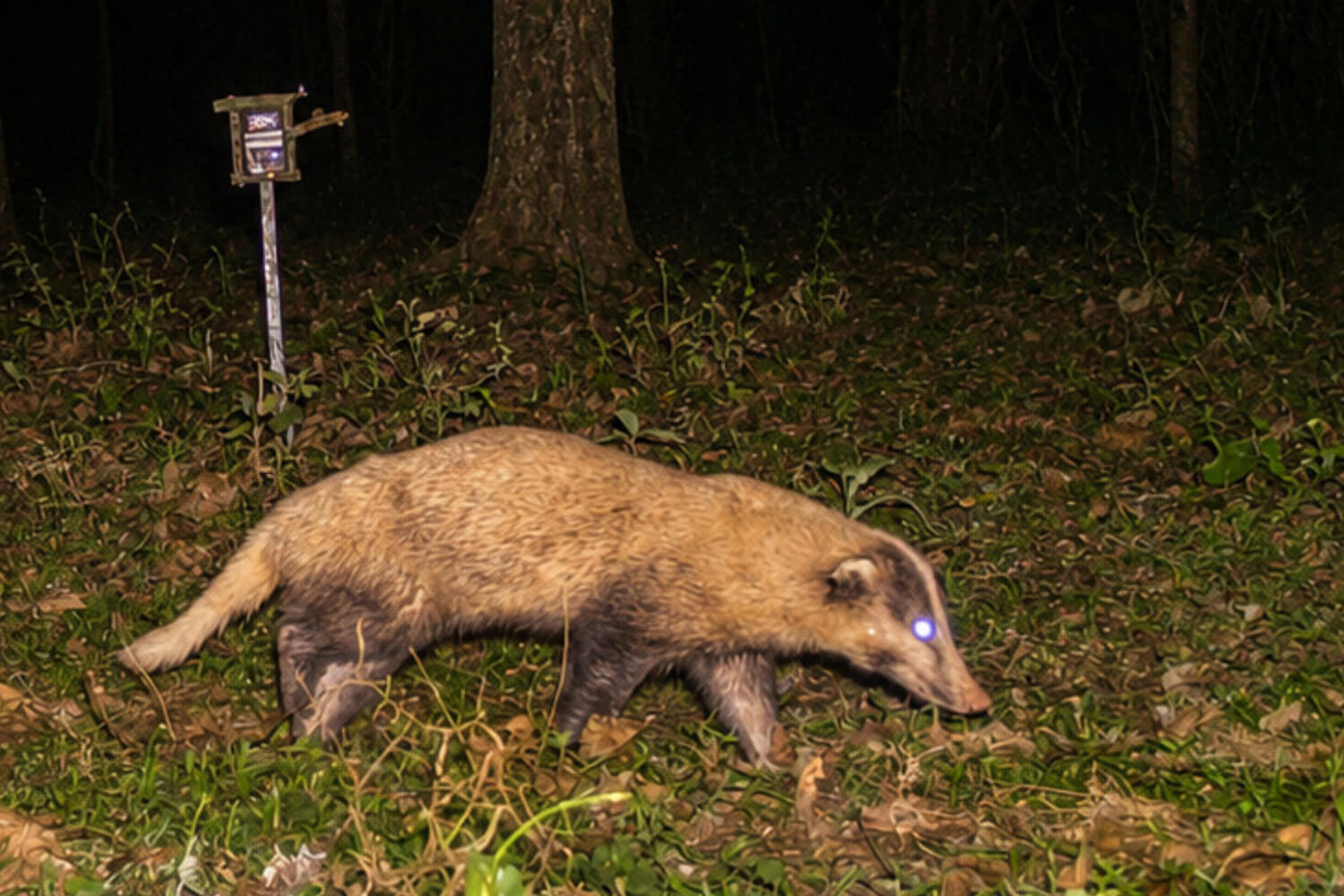
The Greater Hog Badger is listed as Vulnerable on the IUCN Red List and receives the highest legal protection under Schedule I of India’s Wildlife Protection Act, 1972.
- Their major threats include habitat loss, hunting pressure, poaching and human disturbance.
- Although the species occurs across several countries in South and Southeast Asia, populations have declined in many parts of its range.
The Greater Hog Badger may not receive the same attention as tigers or rhinos, but its ecological role is significant. Its presence often reflects a healthy and functioning ecosystem. As an omnivorous and highly fossorial mammal, it helps maintain ecosystem health by:
- Aerating soil through digging activities
- Redistributing nutrients within the forest floor
- Turning over leaf litter during foraging
- Creating conditions that support seed germination
- Forming microhabitats for smaller animals and invertebrates
Why Assam and Northeast India Are Important?
Wildlife experts believe Northeast India may now represent one of the most important strongholds for the species. According to conservationists;
- The species has declined significantly across much of Southeast Asia
- India and Thailand are believed to support some of the healthiest remaining populations
- Assam’s protected landscapes play a critical role in securing its future
The findings from Kaziranga further strengthen the region’s global conservation significance.
A Positive Sign for Kaziranga’s Biodiversity
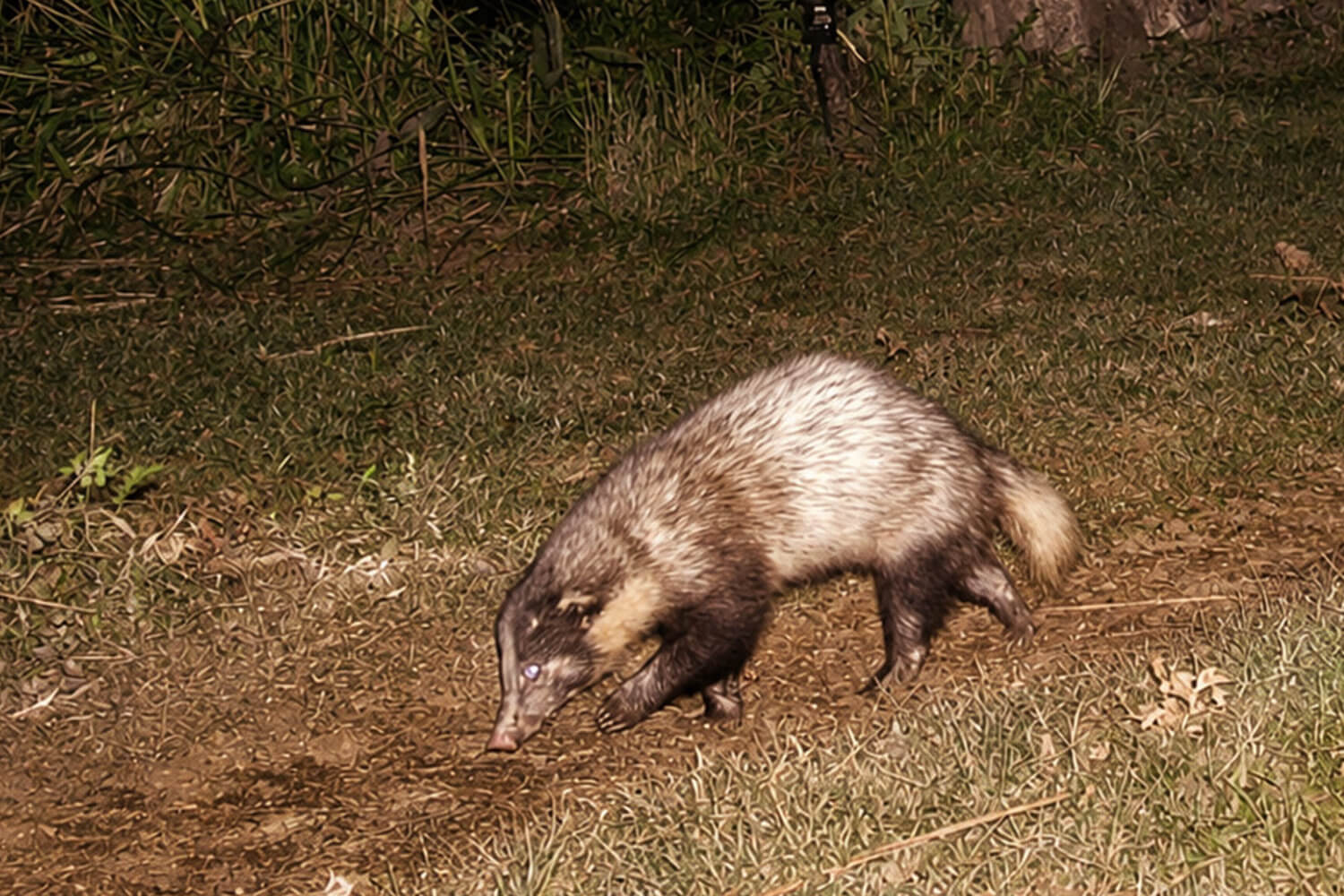
This assessment demonstrates how existing wildlife monitoring programmes can uncover valuable information about lesser-known species. By using camera-trap data collected for tiger surveys, researchers have gained fresh insights into a species that has historically received limited scientific attention.
The discovery is also a reminder that successful conservation is not measured only by the survival of iconic animals. Healthy populations of smaller mammals such as the Greater Hog Badger are equally important indicators of a thriving ecosystem.
For conservationists, the findings represent more than just a population estimate in Kaziranga National Park. They offer evidence that Kaziranga’s diverse habitats continue to support wildlife at every level of the food chain, from the largest mammals to some of its most elusive burrowing residents.
Other Interesting Blogs to Read
- Popular Tea Gardens to Visit in Assam
- Tea Estate Tourism at Kaziranga National Park
- Rare Golden Tiger Sighting at Kaziranga National Park
- Best Tourist Destinations in Assam
- The Rhino Population of Kaziranga National Park in Assam Rises
- Best Places to Visit in Kaziranga National Park
- Interesting Facts About Kaziranga National Park
- Importance of the Conservation of Greater One-Horned Rhinos
- Best Wildlife Resorts to Stay in Kaziranga
- Top 10 Reasons to Visit Kaziranga Tiger Reserve in Assam
- Discover Kaziranga Beyond Wildlife: Culture, Heritage & Nature
- Astro Tourism in Kaziranga
- Kaziranga Elevated Corridor
- Freshwater Turtle Population in Kaziranga National Park
- Elephant Safari in Kaziranga
- Kaziranga Emerges as a Global Avian Hub with 103 Migratory Species Recorded This Winter
- Kaziranga Emerges as a Fishing Cat Stronghold with 57 Individuals Recorded in Its First Scientific Survey
- Waterbird Population in Kaziranga
- Kaziranga’s Panbari Reserve Forest Now Open to Tourists: A Birdwatcher’s Delight



 Share
Share Home
Home Packages
 Book Now